
Utah Felony Records and Criminal Case Lookup
Utah felony records are public documents maintained by the state court system, the Bureau of Criminal Identification, and the Department of Corrections. Anyone can search felony cases filed in district courts across all 29 Utah counties. The primary tool for searching is the XChange system at utcourts.gov, which provides real-time access to court case data including charges, hearing dates, and case outcomes. Felony records in Utah cover convictions, pending cases, and dismissed charges that remain part of the public court record. This guide explains each search method and what you can find.
Utah Felony Records Quick Facts
How to Search Utah Felony Records
Searching Utah felony records starts with knowing which system holds what you need. Court case records live in the XChange system. Criminal history summaries come from the Bureau of Criminal Identification. Custody status for state inmates is available through the Department of Corrections. Each source serves a different purpose, and most searches begin with the court system because it holds the broadest set of public felony case data.
The XChange system is the official Utah court records portal for public access to district court and justice court case data. All felony criminal cases in Utah are filed in district courts, not justice courts. You can search by party name, case number, citation number, or date of birth. Results show the names of all parties, the assigned judge, attorneys of record, filed documents, hearing dates and outcomes, and the final disposition of the case. Records are available from the mid-1990s forward for most courts, with some districts going back further in the digital record.
Guest access to XChange costs $5 per session plus $0.20 per search. A monthly subscription runs $25 to set up and $40 per month, which covers 500 searches. Document downloads cost $0.50 each. If fees are a concern, free public terminals are available at most district courthouse locations throughout Utah. You can walk in during business hours and run searches at no charge using those courthouse terminals.
Note: XChange does not include sealed cases, expunged records, or juvenile delinquency cases, which are protected under Utah law regardless of the nature of the offense.
Utah Courts XChange System for Felony Records
The Utah Courts XChange portal is the most direct way to find felony case records across the state. It covers all seven judicial districts and pulls case information directly from CORIS, the Courts Information System used to manage case data statewide. Case updates appear in XChange in real time as courts enter information into their local systems, so a new charge, hearing, or verdict shows up quickly.
The Utah Courts XChange portal at utcourts.gov lets you search felony cases across all districts.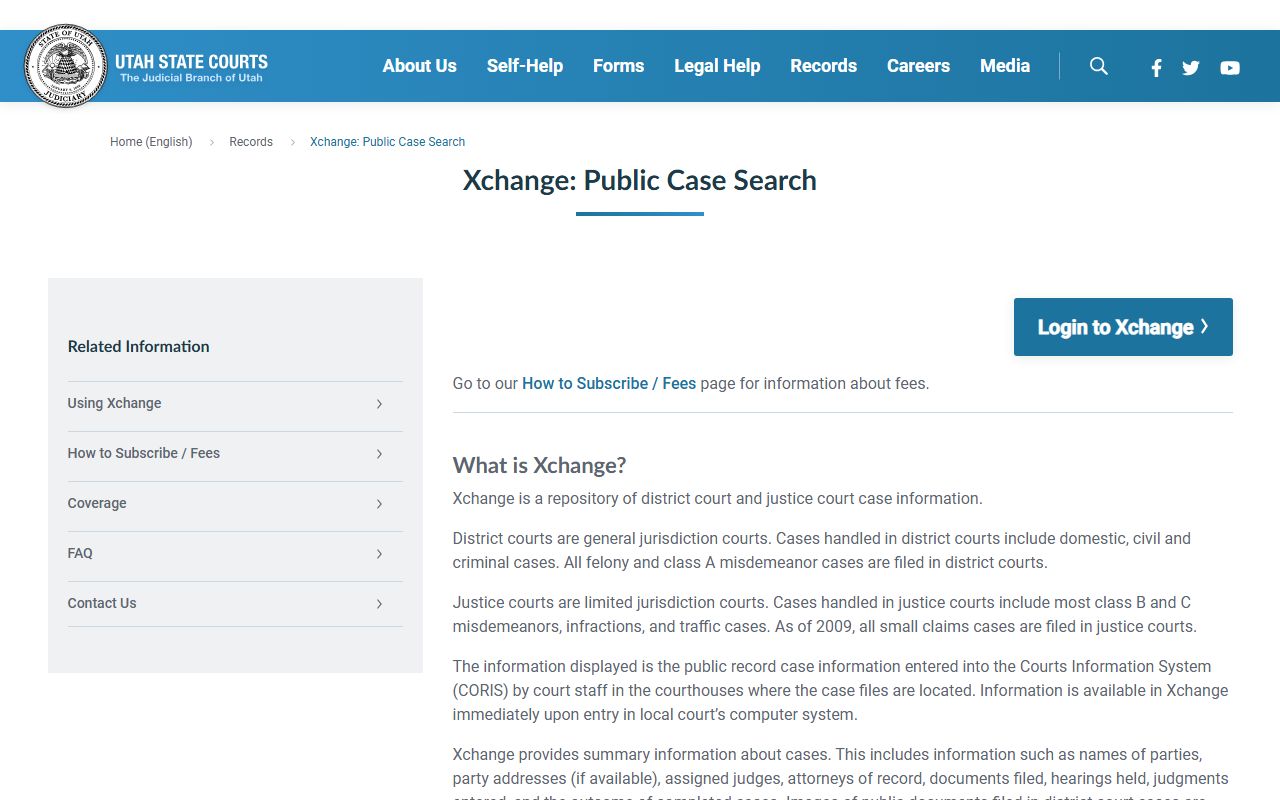
XChange provides access to documents filed in district court cases since July 1, 2010, including charging documents, plea agreements, jury verdicts, and sentencing orders.
MyCase is a related system that gives parties direct access to their own case records. If you are a defendant or another named party in a Utah felony case, MyCase lets you view your scheduled hearings, filed documents, and payment obligations at no cost. MyCase requires account creation with an email address, case number, and government-issued ID to verify your identity and case status. It is available in all district and justice court locations throughout the state and provides 24/7 access to case updates, text or email notifications about filings, and electronic payment options for fines and fees.
Utah Bureau of Criminal Identification and Felony Records
The Utah Bureau of Criminal Identification is the central state repository for criminal history data. BCI maintains comprehensive records of all criminal activities processed through Utah's criminal justice system, including arrests, charges, convictions, and sentences for felony and misdemeanor offenses. Where XChange shows case-level court records, BCI provides a consolidated criminal history tied to an individual across all Utah cases.
BCI operates its main public-facing office at 3888 West 5400 South, Salt Lake City, UT 84118. You can reach them by phone at (801) 965-4445 or (801) 965-4555. Office hours are Monday through Friday, 8:00 AM to 5:00 PM, excluding state holidays. Individuals may request a copy of their own Utah criminal history in person or by mail. Valid government-issued photo identification is required. Utah Driving Privilege Cards are not accepted.
The Utah Bureau of Criminal Identification maintains the state's central repository for criminal history records.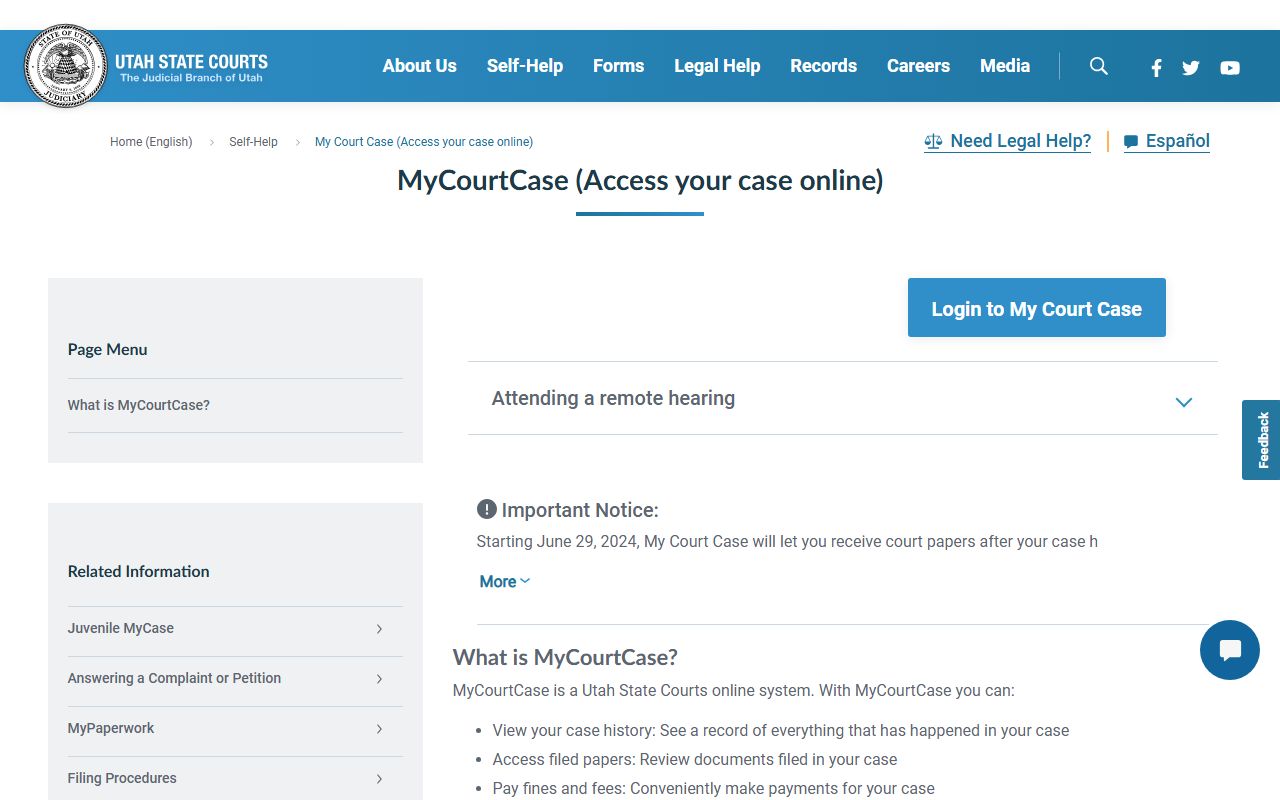
MyCase and BCI serve different functions: BCI provides criminal history summaries while MyCase gives parties direct access to their active court filings.
BCI offers two levels of checks. A Level 1 name-based check costs $15 and searches the county-level database using name criteria alone. This is the basic option for personal record review. A Level 2 fingerprint-based check costs $33.25 and runs through both the Western Identification Network and the FBI, returning a nationwide criminal history that includes prison and jail records, prior addresses, and civil judgments. Fingerprinting services are available by appointment at the BCI office and through approved vendors statewide. If you believe your BCI criminal history contains errors, you can file a challenge using the Criminal History Record Challenge Form available on the BCI website.
Utah Felony Classifications and Penalties
Utah law divides felonies into four categories based on the severity of the offense. Each category carries different sentencing ranges and fines set out in Utah Criminal Code Title 76. Knowing the classification of a felony helps you understand what a conviction means in terms of prison time and financial penalties.
Capital felonies are the most serious. They carry the death penalty or life in prison without the possibility of parole. First degree felonies carry a sentence of five years to life and a fine of up to $10,000. These include crimes like aggravated robbery, aggravated kidnapping, and rape. Second degree felonies carry one to fifteen years in prison and up to $10,000 in fines. Third degree felonies are punishable by up to five years in prison and up to $5,000 in fines. Under Utah Code Title 63G Chapter 2, felony conviction records are public documents governed by the Government Records Access and Management Act.
Utah uses an indeterminate sentencing system. A judge imposes a range rather than a fixed term. The Board of Pardons and Parole then determines the actual release date based on the offender's conduct and program completion in prison. This means a person convicted of a first degree felony may serve anywhere from five years to the rest of their life depending on parole board decisions.
Utah Criminal Code Title 76 at le.utah.gov contains all felony classifications, elements, and penalty provisions.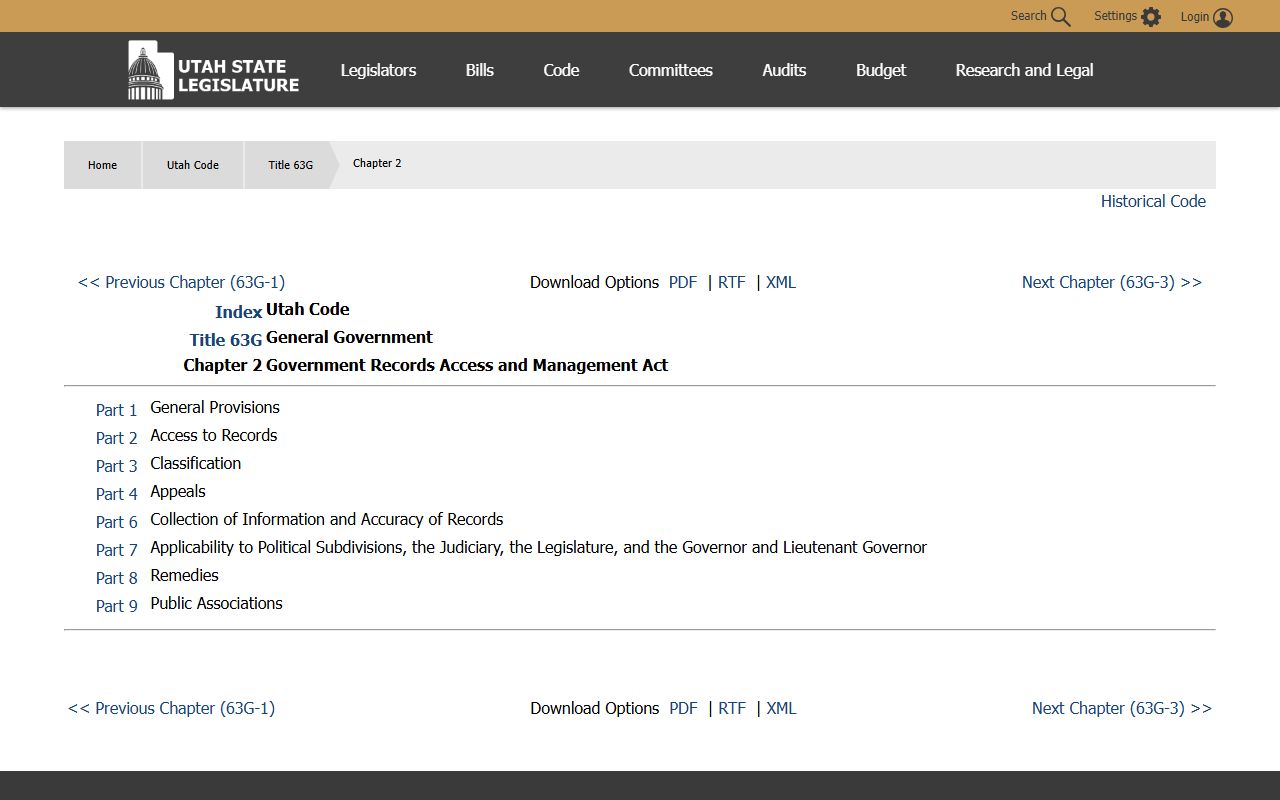
Title 76 of the Utah Code is the definitive source for understanding what conduct constitutes a felony and what punishment applies.
Note: Sentencing enhancements can increase the degree of a felony charge when aggravating factors are present, such as use of a deadly weapon or prior conviction history.
GRAMA and Public Access to Utah Felony Records
The Government Records Access and Management Act, known as GRAMA, is codified at Utah Code Title 63G Chapter 2. GRAMA establishes the legal framework for public access to government records in Utah. Under GRAMA, every person has the right to inspect a public record free of charge and to take a copy during normal working hours. Court records, including felony case files, are presumed public unless specifically classified otherwise under state law.
GRAMA divides government records into four types. Public records are open to anyone. Private records contain personal information protected from general disclosure. Controlled records include medical and psychological data. Protected records cover ongoing investigations and other sensitive matters. Most felony court records fall into the public category. Juvenile records, sealed cases, and expunged records do not.
To submit a GRAMA request for records not available online, use the Utah Open Records Portal. The portal lets you select the specific agency, describe the records sought, and track your request through to completion. Agencies must respond within 10 business days for standard requests. The first 30 minutes of staff research time are free. After that, agencies may charge $25 per hour for staff time. Paper copies cost no more than $0.50 per page, and certified copies cost $10 each.
The Utah Open Records Portal at openrecords.utah.gov is the centralized system for submitting GRAMA requests to state and local agencies.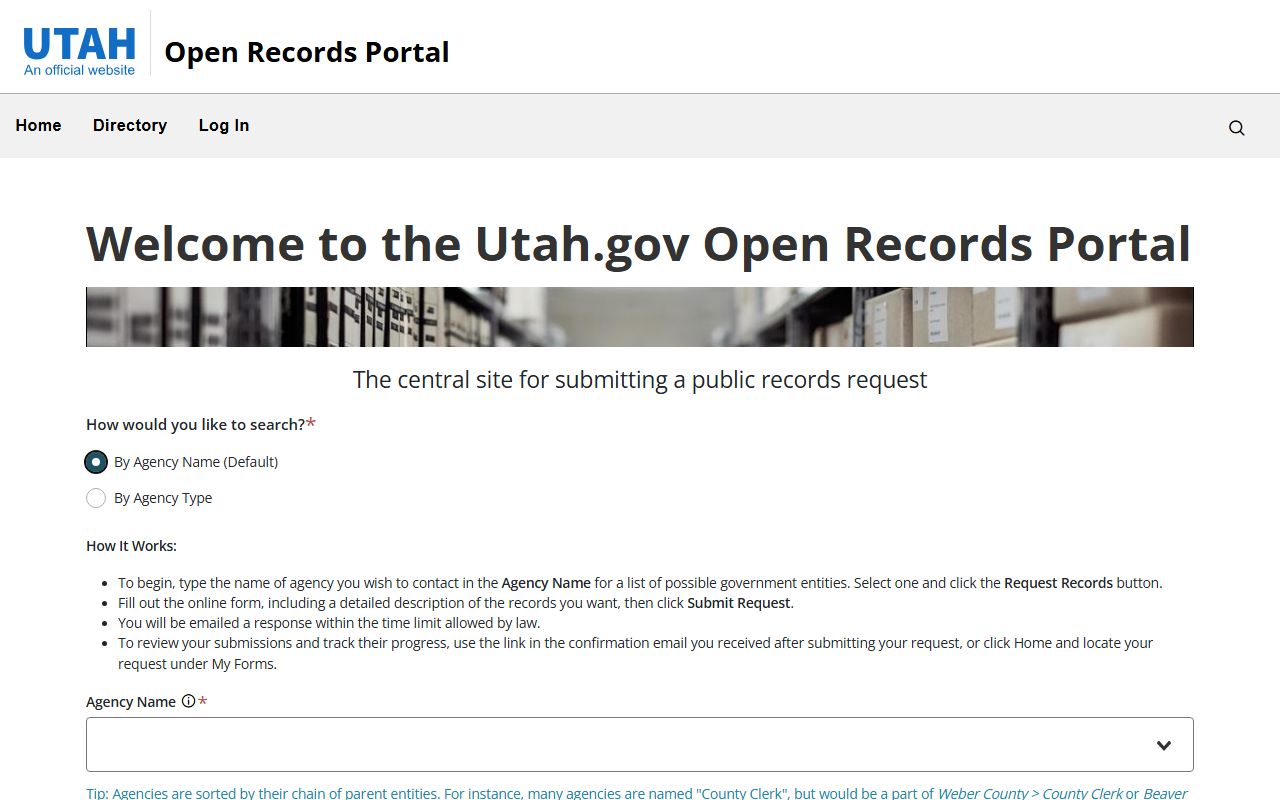
The portal includes a directory of all participating agencies, from state departments to county sheriffs, and allows electronic tracking of request status and agency responses.
If an agency denies your request, GRAMA gives you the right to appeal. You first appeal to the agency head. If still denied, you can bring the matter before the State Records Committee, which meets monthly and has authority to order agencies to release records improperly withheld. Decisions of the State Records Committee can be further appealed to district court for judicial review. Fee waivers are also available if you can show the release of the requested records primarily benefits the public rather than your personal interest.
The Utah Attorney General's Office has statewide jurisdiction over complex felony prosecutions, including white collar crime, public corruption, and multi-county cases. The Attorney General's office coordinates with all 29 county attorneys and publishes press releases on major felony convictions and plea agreements, which serve as a supplemental public record of significant criminal cases.
Utah Department of Corrections Offender Records
The Utah Department of Corrections maintains records for all adult offenders under state prison jurisdiction, including those currently incarcerated and those under supervision after release. Their offender lookup system is free and available 24 hours a day. You can search by name or by the Utah Department of Corrections identification number. Results include basic demographics, alias information, current custody status, and facility location for inmates who are still incarcerated.
The Utah Department of Corrections offender search provides free public access to custody and supervision records for state prison inmates.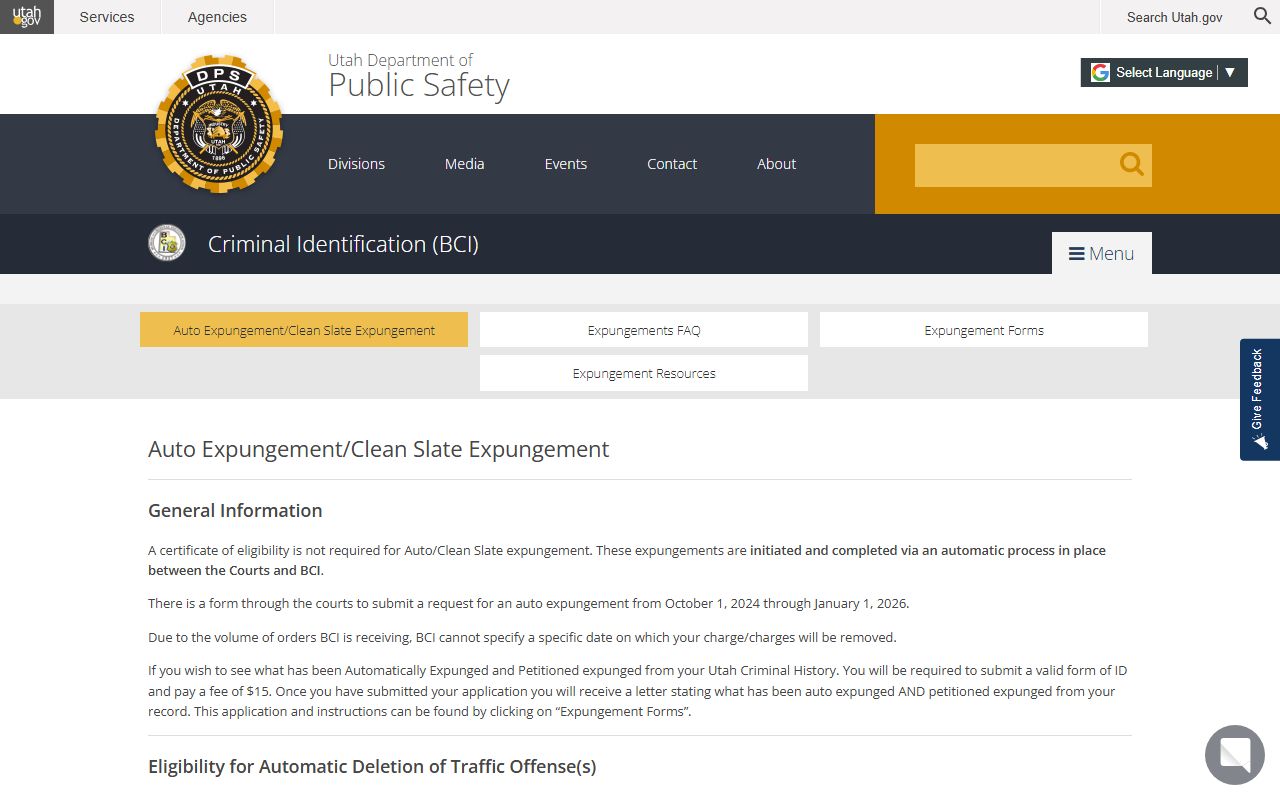
Offender records are updated approximately every two months, providing current information on parole and probation status along with historical felony conviction data for those serving state sentences.
The Department of Corrections also administers the Sex Offender Registry, which gives the public access to registered sex offender information including photos, physical descriptions, conviction details, and compliance status. The registry is updated weekly and can be searched by name, address, city, county, or zip code. Level 3 high-risk offenders are subject to active community notification. The registry includes offenders convicted in Utah as well as those from other states who have moved to Utah, and mapping tools let you view offender locations within a set radius of any address.
Note: The Department of Corrections does not hold court records. For case details beyond custody status, you still need to use XChange or submit a direct court records request.
Active Warrant Search in Utah
Utah maintains an official statewide warrant database that is free for the public to search. The Utah Statewide Warrant Search is managed by the Department of Public Safety and updated as warrants are issued and cleared. You can search by name and other identifying information to find active felony warrants, misdemeanor warrants, and bench warrants issued by courts across the state.
Each record in the warrant database links to the underlying court case so you can see the charges, the issuing court, the bond amount, and the date the warrant was issued. Law enforcement statewide relies on this same database for warrant verification during traffic stops and investigations. When a warrant is served, recalled, or quashed by the court, it is removed from the active database. Searching this system takes only a few minutes and requires no registration or fee.
Expungement of Utah Felony Records
Expungement removes a conviction or arrest from the public record. Utah's expungement process begins at the Bureau of Criminal Identification. Before you can file a petition in court, you must obtain a Certificate of Eligibility from BCI's expungement division. The certificate costs $15 and confirms that your record meets the statutory requirements for expungement. Application forms and detailed instructions are available on the BCI website.
Not every felony is eligible for expungement. Certain violent felonies, sex offenses, and DUI convictions are permanently excluded from consideration. For offenses that do qualify, waiting periods apply. Misdemeanors generally require three to seven years of clean record. Felony waiting periods are longer. During the waiting period, you must not have any new convictions or pending criminal charges.
The Clean Slate law, passed as HB 431 in 2022, created an automatic expungement process for certain qualifying misdemeanor convictions. The Clean Slate automated system reviews cases monthly to identify records eligible for automatic sealing once the waiting period has passed, without requiring the individual to file a petition or pay a fee. Once a record is expunged, the individual may legally deny that the record ever existed when asked on applications and other inquiries. Expunged records do not appear in XChange or BCI searches by the general public.
The expungement statutes are found in Title 77, Chapter 40 of the Utah Code. If you believe your record contains errors before or during the expungement process, BCI allows you to submit a Criminal History Record Challenge Form to dispute inaccurate or incomplete information. A 10-print fingerprint card may be required for challenge applications to verify identity.
Historical Utah Felony Records and Archives
Electronic systems like XChange hold records from the mid-1990s forward, but felony cases from earlier periods are still accessible through the Utah State Archives. The Utah State Archives at 346 South Rio Grande Street in Salt Lake City maintains the District Court Criminal Case Index, which provides searchable index information for criminal cases dating back to territorial times. Historical prison records from the Utah State Prison are also held at the archives, including inmate registers from the 19th century.
The Utah State Archives maintains historical court records and criminal case indexes predating the XChange electronic system.
Research access is available both through online search tools and in-person appointments at the Rio Grande Street location, where staff can help locate specific historical felony cases and related documents.
The Archives holds probate records, territorial court records, and early statehood criminal court records. These include charging documents, trial transcripts, and sentencing orders from cases tried before digital record-keeping began. If you are researching a felony case from before 1995, the Archives is likely your best source. GRAMA request forms for historical records are available through the Archives website. Research services are provided by trained archivists who can help you identify the correct record series for your search.
Statute of limitations rules affect how long a felony charge can be brought, which in turn shapes the historic record. Under Utah Code section 76-1-301, there is no statute of limitations for major felonies including aggravated murder, murder, manslaughter, child abuse homicide, rape, aggravated kidnapping, human trafficking, and related offenses. These cases can be prosecuted at any time, meaning historical records for these offenses carry ongoing legal significance. Most other felonies carry a four-year statute of limitations, though forcible sexual abuse and incest have an eight-year limit if reported within four years of the offense.
Utah Attorney General and State Records Resources
The Utah Attorney General's Office plays a central role in complex felony prosecutions across the state. The Criminal Division handles cases that span county lines, including white collar crime, public corruption, securities fraud, and organized criminal activity. Special Agents from the office hold statewide law enforcement authority and work alongside local prosecutors. The Attorney General coordinates with all 29 county attorneys on major felony matters.
The Utah Attorney General's Office publishes press releases and case information on major felony prosecutions handled by its Criminal Division.
The Attorney General's website is a useful source for public information on high-profile felony cases, including Medicaid fraud prosecutions, elder fraud cases, and criminal appeals before the Utah Supreme Court.
For those who need to challenge a GRAMA denial at the state level, the State Records Committee provides an independent administrative appeals process. The Committee meets monthly, hears appeals from denied records requesters, and has authority to order agencies to release records that have been improperly classified or withheld. Meeting minutes and prior decisions are public records available on the Committee's website, offering a useful reference for understanding how GRAMA has been interpreted in specific situations involving criminal records.
Note: The Attorney General's office does not provide individual criminal history checks. Those are handled exclusively by BCI.
Browse Utah Felony Records by County
Each of Utah's 29 counties has its own district court that handles felony case filings. Select a county below to find local court information, contact details, and resources for searching felony records in that area.
Browse Utah Felony Records by City
Felony cases are filed at the district court serving the county where the city is located. Select a city below to find felony record resources for that area.